
Quick answer: Yes. Good window film blocks 99% or more of the sun’s UV, and 3M’s car and home films are rated up to 99.9%. Plain glass stops most UVB but lets plenty of UVA through, and car side windows block less UVA than windshields. Even 3M’s nearly clear Prestige film blocks 99.9%, so dark tint isn’t needed for UV.
We’ve tinted more than 120,000 cars and 5,000 homes since 1989, and we’re one of only two 3M Prestige Dealers in San Antonio.
Texas drivers know the look: one forearm a shade darker than the other, like you’ve been slow-roasting on one side for years. Some of that came through an open window. Some of it came through a closed one, through glass you assumed was doing its job.
How much UV does glass block, with and without film?
Plain glass blocks some UV, but not all of it. In 3M’s lab tests, clear single-pane glass blocks about 40% of UV and clear double-pane glass about 55%. Car windshields do much better and car side windows much worse. With quality film on any of them, the number goes to 99% or more.
| Glass | UV blocked | Source |
|---|---|---|
| Clear single-pane window, no film | About 40% | 3M Night Vision 15 bulletin |
| Clear double-pane window, no film | About 55% | 3M Night Vision 15 bulletin |
| Car windshield, no film | 96% of UVA, on average | JAMA Ophthalmology, 29 cars |
| Car side windows, no film | 71% of UVA on average, as low as 44% | JAMA Ophthalmology, 29 cars |
| Home glass with 3M Prestige | 99.9% | 3M Prestige specification |
| Home glass with 3M Night Vision 15 | 99.9% | 3M Night Vision 15 bulletin |
| Car glass with 3M Crystalline | Up to 99.9% | 3M Crystalline data sheet |
| Skin Cancer Foundation Seal, minimum for window film | 99% of UVA and UVB | Skin Cancer Foundation |
The home glass numbers cover the whole UV range, and the car numbers are UVA only, so they aren’t a perfect side-by-side. The point holds either way: glass alone leaves a gap, and film closes it. It’s a bit like finding out your umbrella has been 55% umbrella this whole time.
Does window tint block UVA and UVB?
Yes, good film blocks both. The Skin Cancer Foundation’s Seal of Recommendation for window film requires at least 99% of UVA and UVB blocked, and 3M says its Crystalline, Ceramic IR and Obsidian car films have earned it (3M window tint FAQ). That matters because glass on its own mostly handles UVB.
Here’s the split, from the Skin Cancer Foundation. UVB is mainly behind sunburn, and it doesn’t get through glass. UVA can get through windows and clouds, makes up as much as 95% of the UV reaching the ground, and is tied to tanning, skin aging and skin cancer.
UVB is the loud one: you know the second it’s got you, because you turn the color of a boiled shrimp. UVA is the quiet one. It never stings and never peels, and somehow everything it touches looks a little older every year, including the dashboard.
Does clear window film block UV?
Yes. UV protection comes from what’s built into the film, not from how dark it looks, so 3M’s nearly clear films block as much UV as its dark ones. 3M’s Crystalline data sheet rates every shade, darkest to lightest, at 99.8% or better, and its sun control brochure rates Prestige 70 home film at 99.9% while it still lets in 63% of the light.
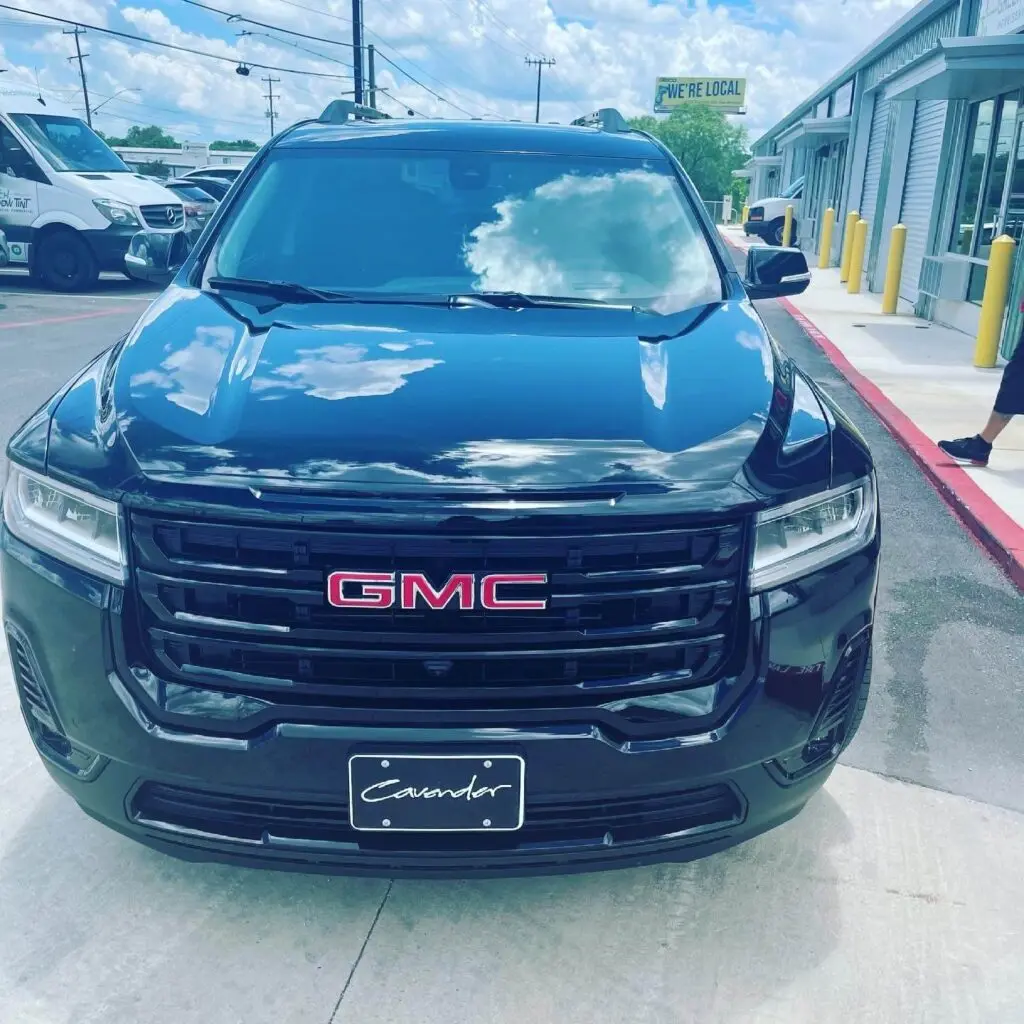
So you can protect the kids in the back seat without making the family SUV look like it’s transporting a witness. And at home, you can block nearly all the UV without the neighbors noticing anything changed.
Do car windows block UV?
The windshield does most of the work, and the side windows don’t. A study in JAMA Ophthalmology measured 29 cars and found windshields blocked 96% of UVA on average, while side windows blocked 71% on average and as little as 44%. The Skin Cancer Foundation explains the gap: windshields are treated to filter most UVA, and side and rear windows generally aren’t.
Which brings us back to that left forearm. In Texas the driver sits on the left, so the window next to you is the one with the gap, and you’ve been parked beside it every rush hour since you got your license.
So the side windows are where car film does the most for UV. On the windshield, Texas has two rules. Texas DPS says a clear, un-tinted UV film is allowed anywhere on the front windshield without a medical exemption. Film that darkens the glass is only allowed above the AS-1 line, or in the top five inches if there’s no AS-1 line, under Transportation Code 547.613, and it has to let 25% or more of the light through, reflect 25% or less, and can’t be red, blue or amber.
3M Ceramic IR 70 is a clear film we put on whole windshields, and our windshield tint page covers which film fits your car. For the full rule, read windshield tint law in Texas.
Does window tint protect your skin?
Film that blocks 99% or more of UV cuts a real share of your exposure behind glass, and the Skin Cancer Foundation recommends looking for film that’s earned its Seal of Recommendation. Film is one layer of protection, though, not the whole plan. 3M says plainly on its home window film page that it hasn’t tested its films for preventing skin cancer, and that they don’t prevent it.
I’m a tint guy, not a dermatologist, and nobody should take skin advice from a man who’s spent 37 summers tinting windows in Texas. What I can tell you is the number on the film, and that some customers come in for exactly this reason:
“Our family is very fair skinned and needs protection from UV. … This is the 4th vehicle that Fletch has done for us and we will keep coming back!”
Diane G., October 2018
Does window tint stop fading?
It slows fading a lot, but nothing stops it completely. 3M’s window film FAQ says UV causes about 40% of fading, visible light about 25% and heat about 25%, with the rest from things like humidity and indoor lighting. 3M says its films can help furnishings last as much as two to five times longer.
You know the stripe on the hardwood where the sun lands every afternoon. You covered it with a rug. Now the rug has a stripe. At some point you have to stop buying rugs and deal with the window.
On a house, every 3M film we install blocks that UV, whichever problem you bought it for. Our guide to the best window tint for home compares the films.
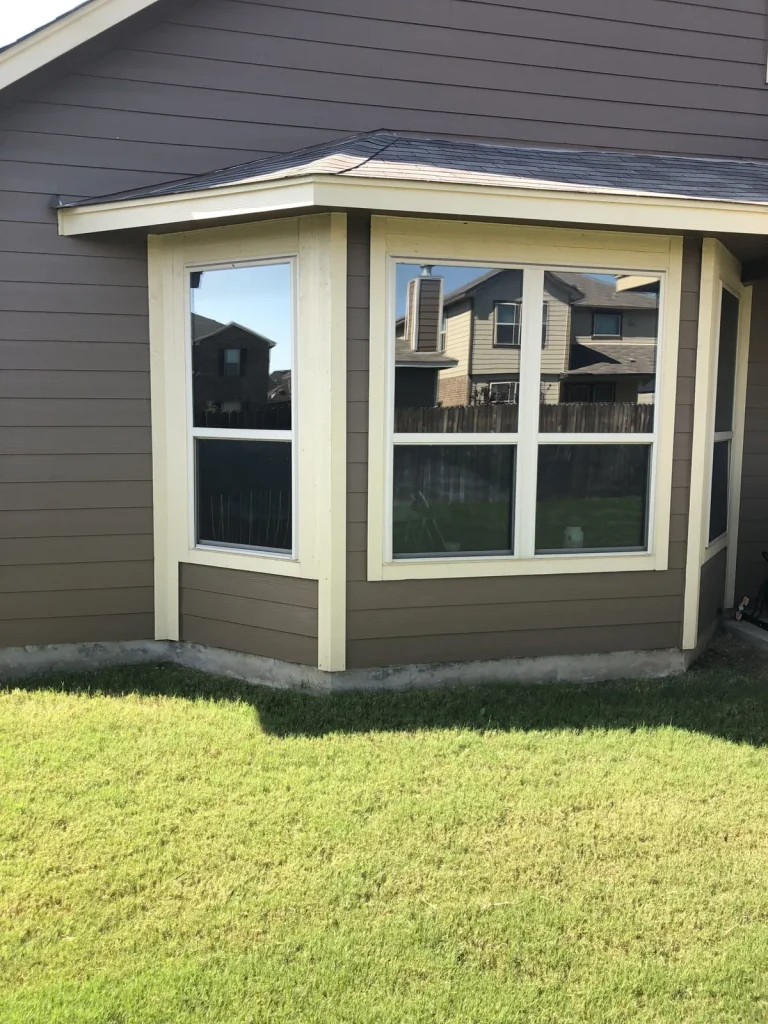
What we see at the shop
According to our reviews, people tint for heat. 31 of our Google reviews mention heat or a cooler car, and hardly anyone mentions UV, because you can’t feel it. That’s exactly why it’s worth knowing the number.
At a home quote, we hold a heat lamp behind each sample so you can feel the difference with your hand. UV doesn’t work like that, so for UV we go by 3M’s published numbers. The 3M sun control films we put on homes, Prestige, Night Vision and Thinsulate, are rated at 99.8% or better. On cars, all three 3M films we install carry the Skin Cancer Foundation’s Seal, which means 99% or more.
Most homes are done in a day, and most cars the same visit. Your left forearm should start catching up with your right one by next summer.
Frequently asked questions
Does window tint block UVA and UVB?
Yes. Quality window film blocks 99% or more of both, which is the Skin Cancer Foundation’s minimum for its Seal of Recommendation. 3M rates its car and home films at up to 99.9%.
Does darker tint block more UV?
No. UV protection comes from what’s built into the film, not its darkness. 3M rates its Crystalline car film at 99.8% or better in every shade, from the darkest to the lightest.
Can you get sunburned through a car window?
It’s unlikely, because glass filters out most UVB, the rays mainly behind sunburn. UVA still gets through untreated side windows, and the Skin Cancer Foundation links UVA to tanning, skin aging and skin cancer.
Does home window film block UV?
Yes. 3M Prestige and Night Vision home films are rated at 99.9% UV blocked. In 3M’s tests, clear glass with no film blocks about 40% of UV in a single pane and about 55% in a double pane.
Is clear UV film legal on a Texas windshield?
Texas DPS says a clear, un-tinted UV film is allowed anywhere on the front windshield without a medical exemption. Film that darkens the glass is only allowed above the AS-1 line or in the top five inches, and it must let 25% or more of the light through.
For your house, 3M home window film blocks 99.9% of UV, goes on in about a day, and runs about $7 to $19 per square foot. For the car, 3M car window tint covers the side and rear windows, and our windshield tint page explains what’s allowed on the front glass.
Sources
- 3M: Prestige Series Technical Data Sheet (UV rejection)
- 3M: Night Vision 15 Window Film Product Bulletin
- 3M: Automotive Window Film Crystalline Series Technical Data Sheet
- 3M: Sun Control Window Films brochure
- 3M: Car Personalization Support and FAQs (Skin Cancer Foundation Seal, causes of fading)
- 3M: Home Window Solutions (skin cancer caution)
- The Skin Cancer Foundation: Not All UV Rays Stay Outside, How Window Film Can Help Protect You
- The Skin Cancer Foundation: UV Radiation
- The Skin Cancer Foundation: Updated Criteria for the Seal of Recommendation, May 2025
- Boxer Wachler, Assessment of Levels of Ultraviolet A Light Protection in Automobile Windshields and Side Windows, JAMA Ophthalmology, 2016
- Texas DPS: Window Tinting Standards
- Texas Transportation Code 547.613

Written by Kevin “Fletch” Fletcher, co-owner of Fletch Window Tint
Kevin and his wife Sally have run Fletch Window Tint in San Antonio since 1989. The shop is one of only two 3M Prestige Dealers in the city, with more than 120,000 cars and 5,000 homes tinted. Get a free quote or call (210) 669-2940.