
Quick answer: It depends on the film. One-way (mirror) privacy film only works when it’s brighter outside than inside, so at night, with your lights on, people can see in. Frosted, translucent and blackout films work day and night because they block the view itself, not just the light. For privacy at every hour, choose frosted film.
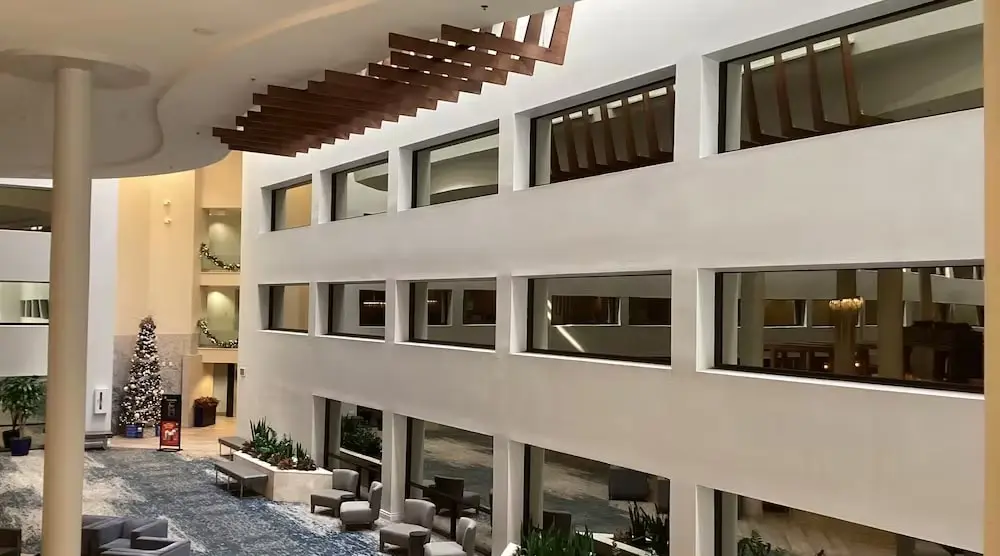
We’ve been putting window film on San Antonio homes and businesses since 1989, including privacy film on the guest-room windows of a Marriott hotel atrium. I’ll tell you what I’d tell you at the quote: mirror film is a daytime product.
Which privacy window films work at night?
Frosted, translucent and blackout films work at night. One-way mirror film doesn’t, because it depends on the outside being brighter than the inside. Very dark dual-reflective films make it much harder to see in after dark, at the cost of a much darker room. Here’s how each type behaves.
| Privacy film type | Private by day? | Private at night, lights on? | Lets daylight in? | Can you see out? |
|---|---|---|---|---|
| One-way (mirror) film | Yes | No, it flips | Yes, dimmed | By day. At night you see your reflection |
| Very dark dual-reflective film | Yes | Much harder to see in | Very little | Yes, dimly |
| Frosted or translucent film | Yes | Yes | Yes | No, the view is blurred |
| Patterned decorative film | Partly, by pattern | Same as by day | Yes | Through the clear parts |
| Blackout film | Yes | Yes | No | No |
| Low-reflective tint (3M Night Vision) | Some, in darker shades | No | Yes, dimmed | Yes, day and night |
If that table had a moral, it would be this: the film that lets you see out is the film that lets them see in, once your side is the bright one.
Mirror film is the friend who’s great company all afternoon and then, around 7pm, starts telling the whole street your business.
Why does one-way window film stop working at night?
One-way film is a thin mirror, and a mirror shows the brighter side. By day the street is brighter, so people outside see a reflection while you see out. At night your lamps make the inside brighter, so the street sees in and you see yourself. The IWFA’s solar control training guide says the privacy “virtually disappears once there is more light in the home than outside.”
3M says the same thing in plainer words: a metallic, reflective film “obscures vision from the brighter side of a window.” Nothing about the film changes at sunset. The sun just stops doing your privacy for you.
And the window quietly starts its night job. Flip on the kitchen light at 9pm and you’ve launched a brand-new channel for the whole street: live, no commercials, now showing you in the good pajamas, losing an argument with a jar lid.
From inside, it gets worse. Your side of the glass becomes the mirror, so you can’t see out at all, and you lose the view and the privacy to the same light switch.
Which privacy window film works day and night?
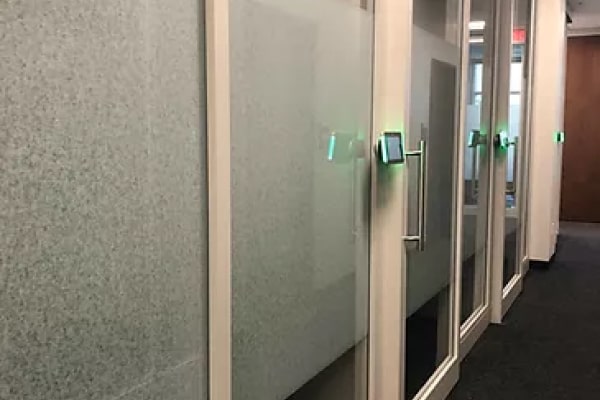
Frosted film. Frosted and translucent films blur the view the same way at every hour, whichever side is brighter, and they still let daylight through. 3M’s own guidance names two ways to block a view: an opaque film that obscures vision “all of the time,” or a reflective film that only works from the brighter side.
3M’s example of the first kind is its White Matte Translucent film, and the International Window Film Association describes privacy films as blocking the view from outside “while still allowing ample sunlight to filter through.” For homes, 3M’s privacy and decorative range includes frosted and dusted designs and patterned 3M Fasara finishes, made for “foyers, entryways, partitions, shower doors, bathroom windows” and the like.
One honest note about frosted film at night. With a bright lamp right behind it, someone outside will see a glow, and maybe a blurry shape if you stand pressed against the glass. They won’t see your face, your TV or what’s on your grocery list.
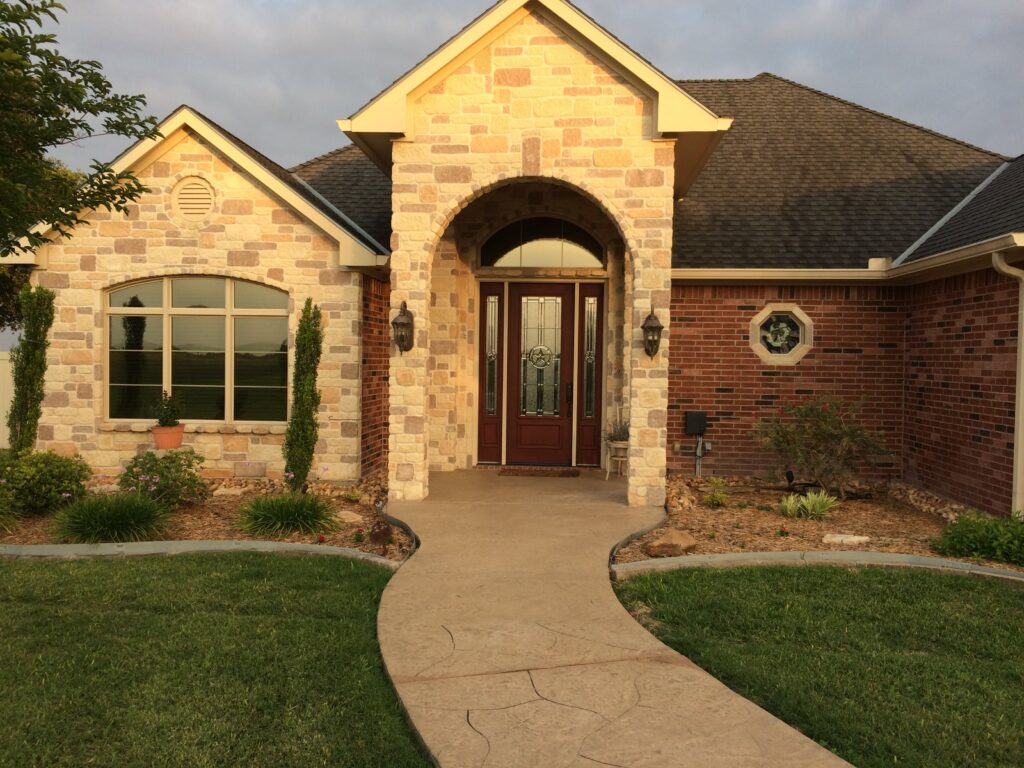
That’s the film we put on bathroom windows, front doors and sidelights. Our privacy window film page has the frosted and patterned options, and for designs with some personality, see 3M decorative window film.
Is there a privacy film you can see out of at night?
Not one that gives you a clear view out and full privacy after dark. If light passes through glass well enough for you to see the street, it passes well enough for the street to see you once your side is brighter. The closest options are a very dark dual-reflective film, frosting only the lower half of the window, or mirror film by day with curtains at night.
This is where online listings get creative. If a product page promises “see out, not in, 24 hours,” it’ll probably throw in a bridge in Brooklyn at checkout.
The nearest thing I’ve seen to an exception is the Marriott atrium. Buildings.com reported that the film there has “a dark side rated at a 5% transparency” facing the room and a mirrored side facing the atrium, and that it’s “very difficult to see inside the rooms, even at night when lights are on inside the guest rooms.”
The catch is in that 5%. A film that lets through that little light does the job by making everything dim, in both directions. A hotel room with drapes can live with that. Most San Antonio living rooms would feel like a movie theater during the trailers.
The options that work for real homes:
- Frost the lower half. Frosted film on the bottom of a window keeps people on the sidewalk from seeing in, and the clear top keeps the sky and the trees.
- Mirror film by day, curtains by night. It’s honest, it’s simple, and it’s what most street-facing living rooms need.
- 3M Night Vision for the view out. 3M says its low interior reflectivity lets you “still enjoy the view out by night.” It helps you see out, but it doesn’t keep the street from seeing in. It’s also a strong heat film, as our guide to the best window film for heat reduction shows.
If you’re not sure which windows need which, the privacy film visit is free, and we bring samples so you can see the frost on your own glass.

Which privacy film should go on which window?
Match the film to the hours you need privacy. Bathrooms, front doors, sidelights and bedroom windows facing a neighbor need privacy at night, so they get frosted or translucent film. Street-facing living rooms and home offices that mostly need daytime privacy can use one-way film, as long as there’s a curtain for evenings.
- Bathroom windows: frosted, every time. I won’t sell mirror film as night privacy, and that goes double for a bathroom.
- Front doors and sidelights: frosted or patterned. Light comes into the entry, and nobody on the porch can see down the hall.
- Bedrooms facing a neighbor: frosted, or frosted on the lower half if you want the sky.
- Street-facing living rooms: mirror film for daytime privacy and heat, with curtains after dark. Our one-way window film page explains the day-only trade.
- Home offices and wellness rooms: frosted. Your video calls deserve a background that isn’t the neighbor’s recycling.

Bathroom glass is the one place in a house where “mostly private” is not a phrase anybody wants to hear.
The first question I’d ask about any privacy window isn’t which window. It’s when. Answer that, and the film picks itself.
What we see at the shop
The Marriott atrium is still my favorite job. Guests in rooms facing the atrium had to close the drapes for any privacy, and the hotel’s general manager told Buildings.com that a guest might open the drapes during breakfast “and you may be peering at an unmade bed.”
We installed the film in a week. The drapes got to retire, and breakfast got a lot less personal.
Smaller jobs have the same goal. Clirissa H. (July 2022) wrote, “I had my entire house tinted with a privacy tint in my bathroom.” Katelynn M. (August 2026) had us do the windows at her company’s San Antonio office “for wellness room privacy and exterior heat rejection,” during working hours.
The wish behind most privacy questions is some version of “I want to see out but nobody can see in.” That’s a fair thing to want. By day, mirror film does it. At night, nothing does it without curtains, and I’d rather you hear that from me at your kitchen table than find out from the house across the street.
So the new channel gets cancelled after one season. No finale, no reunion special, and the jar lid wins in private.

Frequently asked questions
Does one-way window film work at night?
No. One-way film only works when the outside is brighter than the inside. At night, with lights on inside, people outside can see in and you see your own reflection.
What privacy window film works day and night?
Frosted, translucent and blackout films. They block the view itself rather than relying on the light, so they work the same at every hour. Frosted film still lets daylight through.
Is there a privacy window film you can see out of but not in at night?
Not one that gives a clear view out and full privacy after dark. Very dark dual-reflective films make it much harder to see in, but they also make the room much darker. Most homes use frosted film where they need night privacy and curtains everywhere else.
Can you see through frosted window film?
No. Frosted film blurs the view in both directions, the same way frosted glass does, while still letting light in. A bright lamp right behind it can show as a glow from outside.
What’s the best privacy film for a bathroom window?
Frosted or translucent film, because it stays private at night. Avoid one-way mirror film in a bathroom, since it stops working once the light is on inside.
How much does privacy window film cost?
At Fletch, home window film runs about $7 to $19 per square foot of glass, installed. The film, the amount of glass and how hard the windows are to reach set the final price.
Get privacy that works at every hour
Tell us which windows you want private and when you need them private, and we’ll match the film to each one. Book a free visit for privacy window film in San Antonio, or read how one-way mirror film works for daytime privacy if you only need the windows covered while the sun is up.
Sources
- IWFA Flat Glass Solar Control Education Guide (PDF)
- 3M Safety and Security Window Film for Schools, frequently asked questions
- 3M Home Window Tints for Privacy and Decoration
- 3M Sun Control Window Films Night Vision Series
- Buildings.com: Improving the Views for a Topline Hotel
- International Window Film Association: Privacy and Glare

Written by Kevin “Fletch” Fletcher, co-owner of Fletch Window Tint
Kevin and his wife Sally have run Fletch Window Tint in San Antonio since 1989. The shop is one of only two 3M Prestige Dealers in the city, with more than 120,000 cars and 5,000 homes tinted. Get a free quote or call (210) 669-2940.