Quick answer: On the front side windows, the darkest legal tint in Texas is whatever meters 25% light transmission, measured through the film and glass together, with 25% or less reflectance. The side windows behind the driver can be any shade, and so can the rear window if the car has an outside mirror on each side.
We’ve tinted more than 120,000 cars in San Antonio since 1989, and we’re one of only two 3M Prestige Dealers in the city. The shades below are 3M’s own numbers.
What’s the darkest legal tint on each window in Texas?
Texas sets a different limit for each window in Texas Transportation Code 547.613. On most cars, the front side windows are the only side glass where “how dark can I go?” has a hard number. This guide is the darkness chapter of our full rundown of Texas tint laws.
| Window | Darkest legal tint | Where it’s written |
|---|---|---|
| Front side windows | 25% light through, with 25% or less reflectance, film and glass together | 547.613(b)(2) |
| Side windows behind the driver | Any shade, limo tint included | 547.613(b)(2-a) |
| Rear window | Any shade with an outside mirror on each side. Without them, DPS applies the 25% limits | 547.613(b)(3) and DPS |
| Windshield | Tint: 25% light through, and only in the strip above the AS-1 line or within 5 inches of the top, whichever is closer to the top. Clear, un-tinted UV film: allowed anywhere | 547.613(b)(1) for tint, DPS for clear UV film |
Everyone asks for “the darkest legal” the way people order “the hottest salsa that won’t hurt me.” It’s a fair request. It just has a different answer on every window.
How do 3M’s shades compare to the Texas 25% rule?
3M publishes how much light each Ceramic IR shade lets through on standard car glass, which it describes as “automotive green glass of 73% VLT.” VLT means visible light transmission, the share of light that gets through. These are 3M’s figures from its Ceramic IR technical data sheet (Revision B, July 2021).
| 3M Ceramic IR shade | Light through on 3M’s car-glass test | Front side windows (25% rule) | Total solar energy rejected |
|---|---|---|---|
| Ceramic IR 5 | 5% | Below 25% | 66% |
| Ceramic IR 15 | 16% | Below 25% | 63% |
| Ceramic IR 25 | 25% | Exactly 25%, no margin | 61% |
| Ceramic IR 30 | 30% | Above 25% | 60% |
| Ceramic IR 35 | 37% | Above 25% | 58% |
| Ceramic IR 50 | 50% | Above 25% | 54% |
| Ceramic IR 70 | 64% | Above 25% | 51% |
| No film (the bare test glass) | 73% | Above 25% | 42% |
Your car’s glass may read differently from 3M’s test glass, so treat this as the map, not the meter.
Picking the film that meters exactly 25% is the tint version of getting to the airport right as boarding starts. It can work. Nobody enjoys finding out. So when someone asks us for 25 on the front doors, we install 30. Glass isn’t 100% clear, and on the cars we see, 30 typically meters between 25 and 27%.
Why doesn’t a 25% film always meter 25%?
Texas measures the film and the glass together. The statute’s words are “in combination with the vent or window,” and car glass isn’t perfectly clear before any film goes on. 3M’s sheet shows the same Ceramic IR 25 film reading 25% on car glass and 31% on clear glass, so the glass moves the number six points on its own.
The statute gives a little slack on the front windows. Under subsection (d), the department may treat a window as exempt if it’s within three percent of the standard. That’s a cushion for a borderline reading, not a target to aim at.
A tint meter doesn’t read the box the film came in. It reads your glass, and it has never once accepted “but the label said 25.”
Does factory tint count?
Factory tint on its own is exempt. Section 547.613(b)(13) covers “a factory-tinted or a pretinted window installed by the vehicle manufacturer” that meets federal standards. Film on top of factory tint is a different reading, which is why our guide to tinting over factory tint exists.
Does darker tint keep your car cooler?
A little, but less than most people expect. On 3M’s car-glass test, Ceramic IR 5 rejects 66% of the sun’s total energy and Ceramic IR 30 rejects 60%. Bare glass on the same test rejects 42%, so the first good film does the heavy lifting, and going from 30% to limo tint adds six points.
Six points is real. It’s the same kind of gain you chase when you circle the H-E-B parking lot three times hunting for the one spot under the tree, then park there anyway with half the car in the sun.
If heat’s the reason you want it dark, pick the film before you pick the shade. I’d rather put a good ceramic film on the front windows at a legal shade than chase darkness. On 3M’s test, even the nearly clear Ceramic IR 70 rejects 51% of the sun’s total energy. Our 3M Ceramic IR window tint page covers the film behind these numbers.
Does darker tint block more UV?
No. The Skin Cancer Foundation says “darker tints do not protect against UV rays any better than clear UV-protective film does.” 3M’s sheet rates every Ceramic IR shade from 5 to 70 at 99.6% to 99.9% UV block on car glass.
The window that needs the help is the one next to your face. A 2016 JAMA Ophthalmology study of 29 cars found side windows blocked 71% of UVA on average, and as little as 44%, against 96% for windshields.
Your left arm already knows this. It’s the one with the better tan, and it got it one red light at a time.
Is the darkest legal tint safe to drive with at night?
The 25% line is the legal floor, not a recommendation. The International Window Film Association says even a 15% film “would appear nearly black from the exterior and make it difficult to see through the glass,” and the front side windows are the ones you check your side mirrors and blind spot through.
My own rule of thumb: if most of your driving happens after dark on unlit roads, stay a step lighter than the legal limit on the front windows. Our advice on this blog has been the same since 2018, “Keep it LEGAL and keep it SAFE,” and I haven’t found a better way to say it.
Dark front glass at night is how people end up backing out of the driveway by feel, memory and the faint crunch of a recycling bin.
Which windows can go darker than 25% in Texas?
The side windows behind the driver can be any shade, because Section 547.613(b)(2-a) exempts them. The rear window can be any shade too, if the car has an outside mirror on each side that shows the driver at least 200 feet behind. That’s where limo tint lives legally, and our guide to whether limo tint is legal in Texas covers it in full.
A dark back seat with legal front windows is a good compromise. The kids get the shade, the dog gets the shade, and the driver gets 25% and a pair of sunglasses.
There’s one more route to darker front windows, and it starts at a doctor’s office, not a tint shop. Section 547.613(e) makes a medical need to be shielded from direct sun a defense to prosecution, and the Texas Department of Public Safety’s medical waiver notice says a vehicle with a physician’s documentation may have darker tint on the front side windows. Our Texas tint exemption guide covers the paperwork.
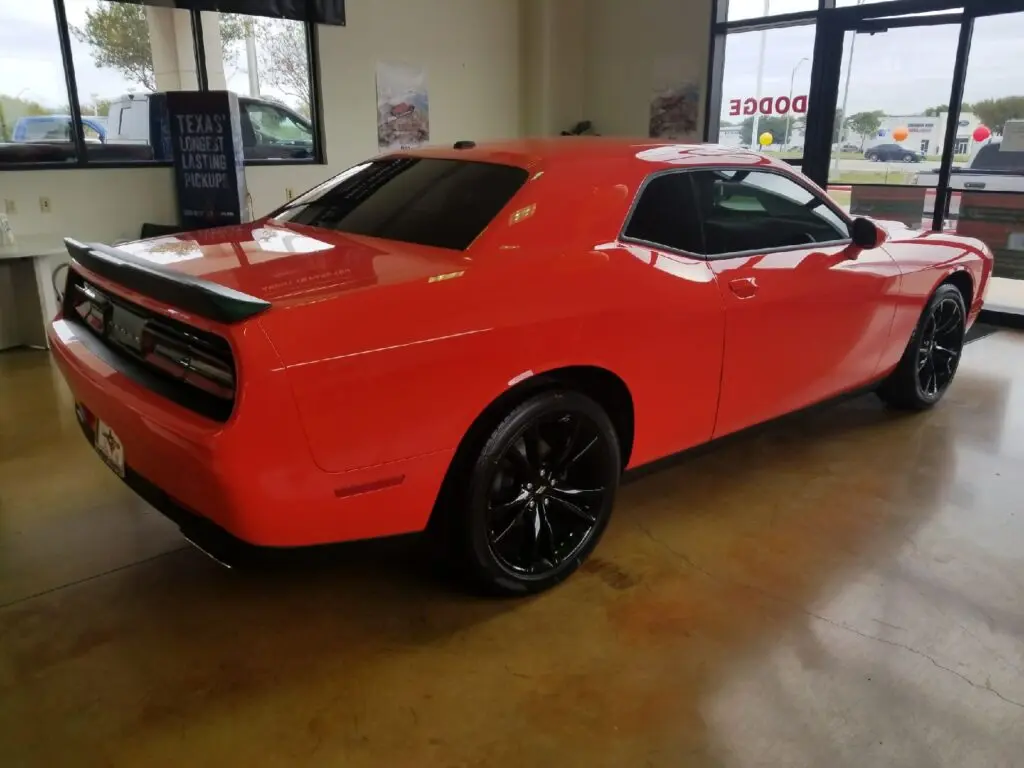
What we see at the shop
Aldrin A. described his July 2022 job like this: “Ceramic tint all around I believe 10% on all the rear windows and 30% for the fronts.” That’s a Texas tint job in one sentence: dark where the law allows it, lighter where an officer looks in.
Customers notice when we slow down on the shades. Edwin D. wrote in February 2022: “They took their time explaining the differences between the tint shades in relation to how they block infrared rays.” Jillian S. said in March 2022: “They walked me through how each tint would impact the manufacturer’s tint (I have a Model Y) and what the visibility would be at night through the glass ceiling.”
The question I’d rather answer than “how dark can I go?” is “what do you want it to do?” Darkness buys privacy and cuts glare. It does less for heat than people expect, and it works against you at night. If what you really want is to stop parking by tree in the H-E-B lot, that’s a film question, not a shade question.
Frequently asked questions
What is the darkest legal tint in Texas?
On the front side windows, the darkest legal tint is 25% light transmission, measured through the film and glass together, with 25% or less reflectance. The side windows behind the driver can be any shade. The rear window can be any shade if the car has an outside mirror on each side.
Is 25% tint legal in Texas?
On the front side windows, Texas requires 25% or more light transmission measured with the film and glass together. A film sold as 25% can read lower once it’s on your glass, so the reading on the car is what counts.
What is the darkest window tint you can buy?
Limo tint is the darkest common shade, usually 5%. 3M’s darkest Ceramic IR shade lets 5% of light through on car glass. In Texas it’s legal on the side windows behind the driver and on the rear window with an outside mirror on each side.
Does factory tint count toward the Texas limit?
Factory tint on its own is exempt under Section 547.613(b)(13), as long as it meets federal standards. Once film goes on top, the reading is the film and glass together.
Can I go darker on the front windows with a medical exemption?
Texas makes a medical need to be shielded from direct sun a defense to prosecution under Section 547.613(e). DPS’s medical waiver notice allows darker tint on the front side windows with a signed statement from a licensed physician or licensed optometrist, kept in the vehicle.
If you want the coolest car Texas allows, start with the film, not the shade. Our 3M Ceramic IR window tint page covers the film and the free quote, and our guide to Texas tint laws covers every other window. Or call (210) 669-2940 between 9:30am and 5:30pm, Monday to Saturday.
Sources
- Texas Transportation Code 547.613, Restrictions on Windows
- Texas DPS, Window Tinting Standards
- Texas DPS, Notice: Window Tint Medical Exemption (effective 1 January 2019)
- 3M Automotive Window Film, Ceramic IR Series technical data sheet, Revision B, July 2021
- Skin Cancer Foundation, Ask the Expert: Car Window Tint for UV Protection
- Boxer Wachler, Assessment of Levels of Ultraviolet A Light Protection in Automobile Windshields and Side Windows, JAMA Ophthalmology, 2016
- International Window Film Association, Automotive Window Film

Written by Kevin “Fletch” Fletcher, co-owner of Fletch Window Tint
Kevin and his wife Sally have run Fletch Window Tint in San Antonio since 1989. The shop is one of only two 3M Prestige Dealers in the city, with more than 120,000 cars and 5,000 homes tinted. Get a free quote or call (210) 669-2940.